
Reviewed · GOLDEN TRIANGLE TOURS
7 Day Golden Triangle Tour With Holi Colour Festival 4 March 2026
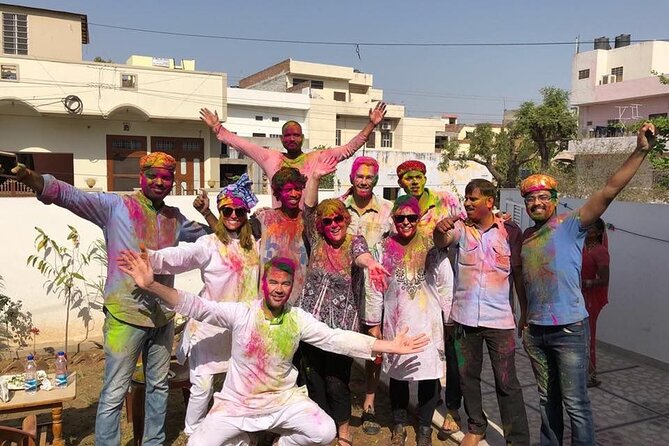
Holi gives this Golden Triangle trip a lively centerpiece: after Delhi’s monuments and Agra’s Taj Mahal, you reach Jaipur in time for the festival on March 4, 2026. I like that the route combines major sights with a local celebration, rather than treating Holi as a quick photo stop.
I also like the private vehicle and local guides, which give your group more room to move at its own pace, and the chance to see both Holika Dahan and Holi in Jaipur. The trade-off is a packed schedule, with long drives, many monuments, and admission fees that are not all included in the quoted price.
- Holi in Jaipur: The plan includes Holika Dahan on arrival and a festival day with local people. Tour team contacts named in past trip accounts include Gopal, with drivers Surendra and Vinod.
- Three-city route: Delhi, Agra, and Jaipur bring together Mughal monuments, Rajput palaces, stepwells, and modern India’s capital.
- Private transport: Your group travels in an air-conditioned vehicle, sized by party: sedan for one or two, wagon for three or four, and minivan for five to ten.
- Six breakfasts: Breakfast is included, and six hotel nights are included only with the accommodation option.
- Budget for extras: Lunch, dinner, personal expenses, and monument entry fees are generally excluded, so the final cost will exceed the headline price.
A seven-day route built around Holi

This trip follows India’s familiar Golden Triangle circuit, but its timing gives Jaipur a starring role. You start in Delhi, head south to Agra, then continue into Rajasthan for Holi before touring Jaipur and returning to Delhi.
The listed price is $335.72 per person, but check which booking option that price covers. Six nights of accommodation are included only if you select the hotel option. Monument entry fees are listed as excluded overall, even though some individual stops show admission as included or free. Ask the operator to confirm exactly which tickets are covered before you budget.
The tour is private, so you travel only with your own group. That is useful on a route with several early starts and long transfers. The vehicle is matched to group size: a four-seat sedan for one or two people, a six-seat wagon for three or four, and a ten-seat minivan for five to ten.
Day 1: Delhi’s sacred water and a hidden stepwell
Your tour begins with pickup at Indira Gandhi International Airport or another agreed hotel or airport location in Delhi. The first stops are Gurudwara Bangla Sahib and Agrasen Ki Baoli, each scheduled for about 30 minutes.
Bangla Sahib is an active Sikh place of worship, known for its association with the eighth Sikh Guru and a water tank connected to a story of healing during an epidemic. It offers a thoughtful introduction to the city’s religious life. Remember that this is a working place of worship, so follow your guide’s instructions and dress respectfully.
Agrasen Ki Baoli shifts the mood. This protected stepwell descends into the ground in a long, geometric run of stairs. The brief stop gives you time to see its structure and take in the contrast between this quiet historic site and Delhi’s modern streets. Thirty minutes is enough for a look, but not a lingering visit.
More Golden Triangle tours in Delhi:
- 3-Days Private Golden Triangle Tour: Delhi, Agra & Jaipur by Car
★ 5.0 · 1,107 reviews - 3-Days Private Golden Triangle Tour: Delhi, Agra & Jaipur by Car
★ 5.0 · 1,098 reviews - 3-Day Delhi, Agra and Jaipur Private Tour – India Golden Triangle
★ 5.0 · 812 reviews
Day 2: Delhi’s empires, faiths, and street markets
Day two covers a wide span of Delhi, from the Qutub Minar complex to Old Delhi’s lanes. Qutub Minar, a 73-metre tower and UNESCO World Heritage site, gets about an hour. Its five levels make it one of the city’s most striking early Sultanate-era monuments, and the included admission is a welcome detail.
At the Lotus Temple, the flower-shaped building offers a different architectural style and welcomes people of all faiths. The stop is listed at 30 minutes, so treat it as a short visit rather than a long period for quiet reflection. India Gate is a 15-minute photo and memorial stop, while Parliament House is viewed as part of the city drive. The itinerary does not assign Parliament a separate visit duration.
Jama Masjid, one of India’s largest mosques, adds a major Mughal-era site to the day. It is listed as a free-admission stop, but access arrangements and any local requirements can change, so follow your guide. Humayun’s Tomb gets an hour and is one of the day’s key paid sights. Its commissioned garden tomb helps set the stage for the Mughal architecture you will see in Agra.
The final stop is Chandni Chowk, where you have an hour to browse the market district. Its lanes are known for spices, dried fruit, silver jewelry, saris, and small specialist shops. The area can feel intense, and an hour goes quickly. I would use the time to follow your guide, notice the street life, and avoid trying to shop for everything at once.
Day 3: Crossing to Agra and seeing the Taj at sunset
After breakfast, you drive roughly 222 kilometres from Delhi to Agra on the Yamuna Expressway. The listed travel time is about four hours, followed by hotel check-in. The transfer is a large part of the day, but private transport means your group can travel together without changing vehicles.
Agra Fort gets about an hour. This UNESCO-listed complex connects the city’s Mughal story with rulers including Akbar and Shah Jahan. Its scale and layered buildings make a guide especially useful: without context, it can be easy to see only a sequence of courtyards and walls.
The Tomb of I’timād-ud-Daulah, often called the Baby Taj, is scheduled for another hour. Its smaller scale makes a pleasant contrast with the fort and the Taj Mahal, and its fine stonework rewards a slower look. Admission is shown as included for both the fort and the tomb in the daily plan, though the general exclusions say monument fees are not included. Confirm this point when booking.
The day closes with a Taj Mahal sunset viewpoint across the river, followed by Mehtab Bagh. The viewpoint is planned for two hours and Mehtab Bagh for 30 minutes. These stops offer a different angle from the next morning’s visit inside the mausoleum. The itinerary describes both as included, another reason to get a clear ticket breakdown before departure.
Day 4: Sunrise at the Taj, then the road to Jaipur
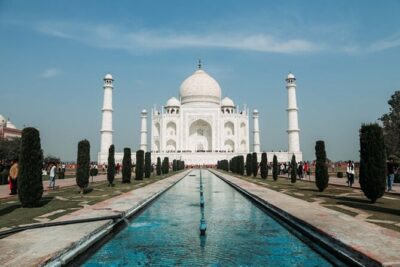
A sunrise visit to the Taj Mahal is the day’s early highlight. The plan allows two hours. At that hour, the white marble can look very different from the warm evening view across the river, and seeing the monument on two consecutive days gives you time to appreciate both its setting and its details.
Next comes Fatehpur Sikri, Akbar’s former capital, scheduled for an hour. The complex was the Mughal capital for roughly a decade in the late 16th century. It is a valuable stop on the drive toward Rajasthan, but an hour is a brisk visit for a large site.
At Abhaneri, Chand Baori’s deep, repeated stairways make a striking stop. The plan allows 30 minutes and lists admission as included. Afterward, you continue to Jaipur and check into your hotel. The evening is set aside for Holika Dahan, the bonfire ceremony linked with Holi. Because the timing matters, confirm that your travel dates place you in Jaipur for the planned celebration.
More week-long trips in Delhi:
- 7-Day Golden Triangle & Varanasi Tour from Delhi with Guide
★ 5.0 · 38 reviews - 7 Day Golden Triangle Tour { Delhi Agra Jaipur Tour }
★ 5.0 · 23 reviews - 7 Days Golden Triangle Delhi,agra, Jaipur
★ 5.0 · 20 reviews - Journey to India’s Heart: 7-Day Golden Triangle Escape
★ 5.0 · 19 reviews
Day 5: Holi with local people in Jaipur
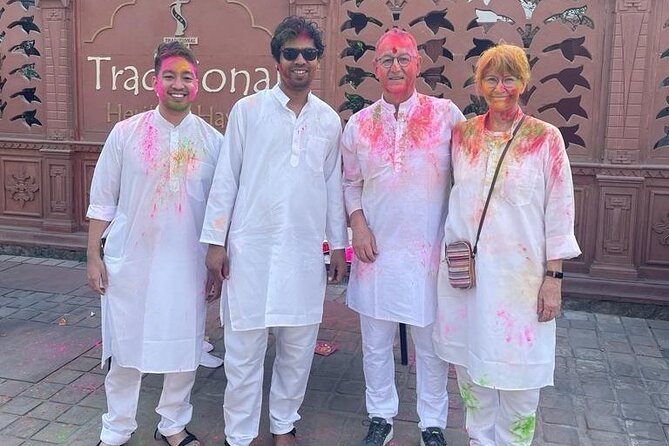
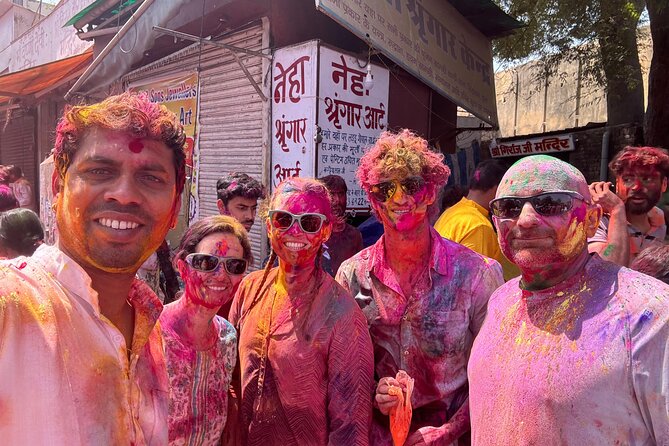
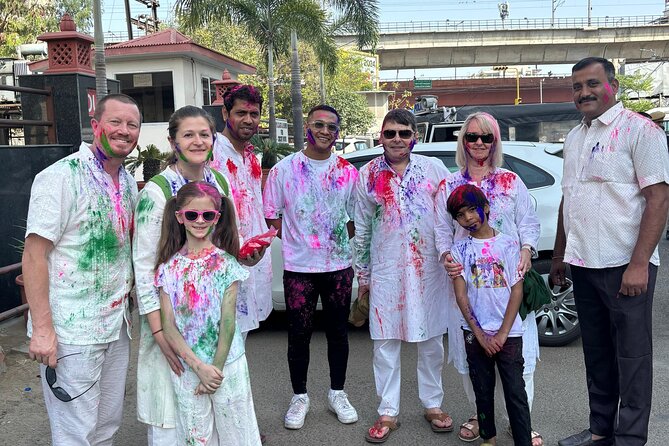
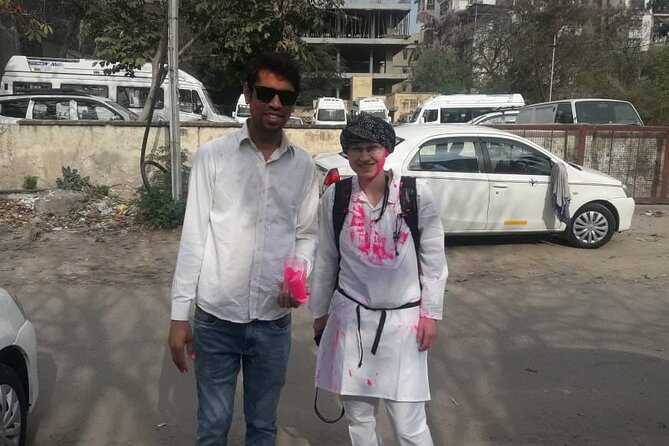
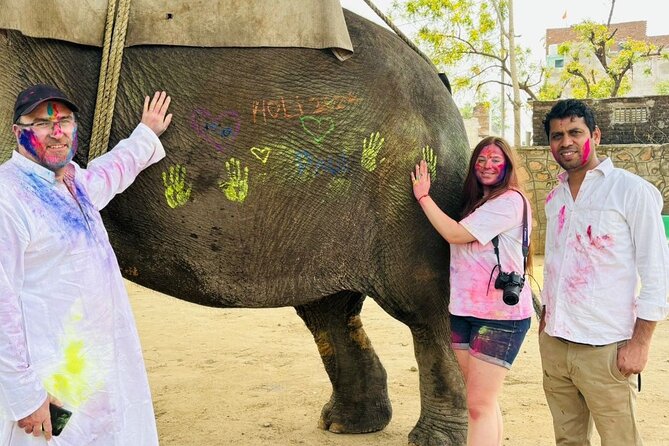
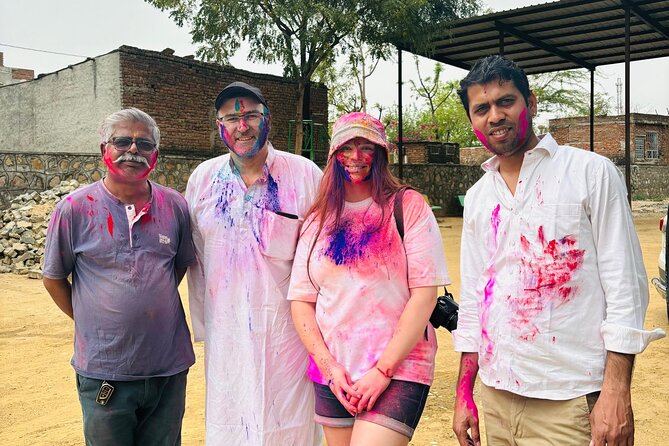
The day is reserved for Holi celebrations in Jaipur, with around six hours listed. The tour describes a gathering with local people, and the team has been associated with visits to Govind Dev Ji temple for the festival. This is the trip’s most distinctive feature: you are not just seeing Jaipur’s monuments, you are there for one of its major annual celebrations.
Holi involves color throwing, music, and crowds, so dress for the activity and protect belongings you do not want stained. The tour information does not specify what clothing, protective items, or refreshments are supplied. Ask the operator what to bring and where the group will meet, especially if joining a temple celebration is important to you.
Gopal is named as a tour-planning contact in accounts of previous trips, while drivers Surendra and Vinod are also mentioned. Those names are useful when you contact the company, but they do not guarantee who will be assigned to your departure. Confirm your guide and the day’s plan directly.
Day 6: Jaipur’s hill fort, palace views, and astronomy
After breakfast, you visit Panna Meena ka Kund, a stepwell near the palace area, for about 15 minutes. It is a compact stop, best treated as a quick look at the stepped geometry rather than a full visit.
Amber Fort follows, with two hours for its palaces, courtyards, and monuments. The fort served as Rajasthan’s capital until 1728, and its hilltop setting makes it one of Jaipur’s major sights. The itinerary does not specify how you travel up to the fort, so ask if that detail matters to your group.
Jal Mahal, the palace in Man Sagar Lake, is listed as a photo stop. The stated duration of one day and six hours is plainly inconsistent with the rest of the schedule, so confirm the actual time planned. The tour then includes Jantar Mantar, a UNESCO-listed collection of astronomical instruments built in 1734, for an hour.
Hawa Mahal gets 30 minutes, followed by an hour at Jaipur’s City Palace. The palace admission is specifically not included. This is one of the clearest extra costs to plan for, alongside any other monument tickets not covered by your chosen option. The day is full, but the stops give you a useful mix of Rajput architecture, royal history, and scientific instruments.
Day 7: A temple stop and the return to Delhi
The final morning includes Birla Mandir, known for its white marble and detailed latticework, and Galtaji Temple, also called the Monkey Temple. Galtaji has three sacred pools and is scheduled for 30 minutes. The itinerary does not give a duration for Birla Mandir, so check how much time is available before the drive.
The return to Delhi takes about five hours, with drop-off at the airport, a hotel, or another desired location in the city. That is a substantial final transfer. If you have a flight, share its departure time with the operator and confirm the drop-off plan rather than assuming the drive will fit a tight connection.
What the price includes, and what it does not
The tour includes private air-conditioned transport, hotel or airport pickup and drop-off, private local guides for sightseeing, bottled water during journeys, and six breakfasts. Six hotel nights apply only when you book the option that includes hotels. Rooms are generally twin-share; groups of three are placed in triple-share rooms by default, with an extra charge for two rooms.
Lunch and dinner are not included, nor are personal expenses, travel insurance, or flight and train tickets. Monument fees are also excluded in the general inclusions, despite some individual stops showing tickets as included. The safest approach is to request a written list of covered admissions and hotel details before you pay.
At $335.72 per person, the headline price can be appealing for a seven-day private route, particularly if your group shares the vehicle and you value having guides and transport arranged. The actual value depends on the hotel option, ticket costs, and your group size. Compare the full expected cost, not just the starting figure.
Who should book this Holi trip?
I would consider this tour if you want to cover Delhi, Agra, and Jaipur in one week and want Holi to be part of the trip rather than an optional side plan. It suits families and small groups who value private transport, guided sightseeing, and a prearranged route. The personal accounts associated with the tour repeatedly highlight the Holi gathering and support from Gopal and the driving team, especially the chance to celebrate together with local people.
It is less suitable if you prefer slow visits, dislike long drives, or want every meal and admission fee included upfront. The itinerary is ambitious, and some durations need clarification. Before booking, confirm the hotel option, ticket inclusions, Holi meeting arrangements, the correct Jal Mahal timing, and your final-day transfer schedule. If those details fit your needs, the festival gives this standard circuit a memorable reason to travel in early March.
FAQ
When is the Holi celebration scheduled?
The tour is dated March 4, 2026. Its plan places Holika Dahan on arrival in Jaipur and the main Holi celebration on the following day. Confirm the exact travel dates and celebration arrangements with the operator.
How long is the tour?
The tour lasts approximately seven days, with six hotel nights if you book the option that includes accommodation.
Where does the tour start?
The listed start point is Indira Gandhi International Airport in New Delhi. Hotel or airport pickup is offered.
Is this a private tour?
Yes. Only your group participates, and transport is by private, air-conditioned vehicle.
What vehicle will my group use?
Groups of one or two use a four-seat sedan, groups of three or four use a six-seat wagon, and groups of five to ten use a ten-seat minivan.
Are hotels included in the price?
Six nights of accommodation with breakfast are included only if you book the option that includes hotels. Rooms are generally twin-share. A group of three is assigned a triple-share room by default.
Which meals are included?
Six breakfasts are included. Lunch and dinner are not included.
Are monument entrance fees included?
The general terms say monument entrance fees are not included, although some stops show admission as included or free. Confirm the specific tickets covered by your selected option.
What is the cancellation policy?
You can cancel at least 24 hours before the experience’s start time for a full refund. Cancellations or changes made less than 24 hours before the start time are not accepted for a refund or change.
Latest reviews from Delhi
- Taj Mahal Day Tour with Private Car and Driver from New Delhi★ 5.0 · 8 reviews
- Old & New Delhi City Private Full Day or Half Day Tour★ 5.0 · 32 reviews
- Dalai Lama Himalayan Trek★ 5.0 · 8 reviews
- Private Delhi Shopping Tour with Female Expert★ 5.0 · 7 reviews
- Private Transfer Delhi -Jaipur || Jaipur- Delhi★ 5.0 · 37 reviews
- Delhi Custom And Shopping Tour★ 4.5 · 9 reviews
- Old Delhi Morning – Fun, Food & Faith all inclusive private tour★ 5.0 · 49 reviews
- Delhi Private City Tour: Customize your own★ 4.5 · 14 reviews
Golden Triangle Tours, compared.
3-Days Private Golden Triangle Tour: Delhi, Agra & Jaipur by Car
Read our review →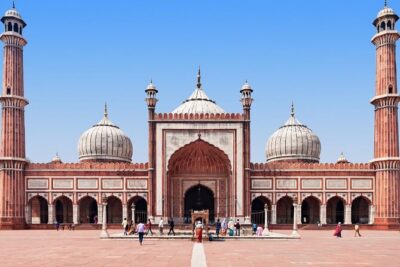
3-Day Delhi, Agra and Jaipur Private Tour – India Golden Triangle
Read our review →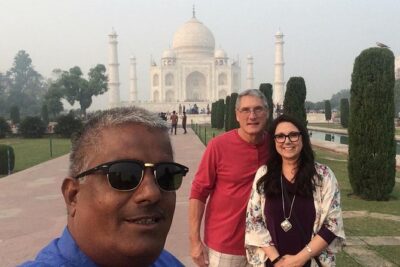
Four-Day Private Luxury Golden Triangle Tour to Agra and Jaipur From New Delhi
Read our review →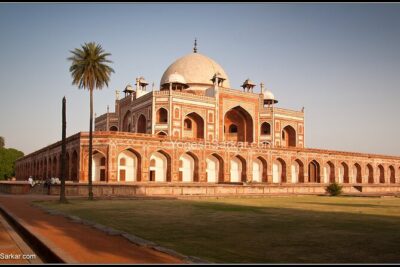
Private Golden Triangle Tour Delhi Agra Jaipur ( Top Rated )
Read our review →
Golden Triangle & Ranthambore: 4-Day Private Tour from Delhi
Read our review →
Browse the lists this tour appears in