
Reviewed · GOLDEN TRIANGLE TOURS
10-Day Private Golden Triangle Tour With Jodhpur Udaipur Pushkar
The big draw is the range: in 10 days, you go from Delhi’s Sikh shrine and Mughal tombs to the Taj Mahal, Jaipur’s pink stone palaces, Jodhpur’s blue lanes and Udaipur’s lakes. Pushkar adds a quieter final stop before the drive back to Delhi.
I like that the private car and driver give you a steady point of contact across six cities, and that local guides can help explain sites whose details are easy to miss on your own. I also like the mix of grand monuments and everyday places, from Chandni Chowk’s lanes to Jodhpur’s Clock Tower Market.
The trade-off is the pace. Long drives and full sightseeing days are part of the deal, and the advertised $437.14 per person does not include the stated $150 per person for monument entry. Check which hotel option you are booking before you compare prices.
The details worth knowing
- Six cities in 10 days: Delhi, Agra, Jaipur, Udaipur, Jodhpur and Pushkar make for a wide-ranging first trip.
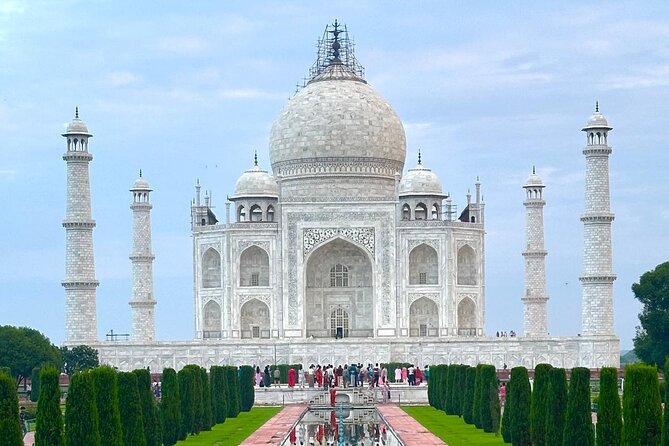
- A sunrise Taj visit: The plan includes two Taj Mahal visits, one at sunset from Mehtab Bagh and another at sunrise.
- Private transport: Your group travels in an air-conditioned vehicle, with vehicle size based on group size.
- A driver throughout: Past trips have named drivers such as Vinod, Ashok, Surendra and Maan. These names are examples, not a promise of who will be assigned.
- Entry tickets cost extra: The stated monument fee is $150 per person, separate from the tour price.
- Hotels depend on the option: Nine nights with breakfast are included only when you choose the package option that includes hotels.
A private route through North India

This tour links the classic Golden Triangle of Delhi, Agra and Jaipur with three very different Rajasthan stops: Udaipur, Jodhpur and Pushkar. That extension is the chief reason to choose it over a shorter Golden Triangle trip. You get Mughal architecture, Rajput forts and palaces, lakeside views, a pilgrimage town and hours on the road between them.
The format is private, so you travel only with your own group. That matters on a trip with early starts and long transfers: you are not coordinating sightseeing with strangers, and the driver can focus on your party. The operator says local guides are provided in each city, while the feedback supplied names Satish as a Jaipur guide and drivers including Vinod, Ashok, Surendra and Maan. Your assigned team may differ.
The listed price is $437.14 per person, but read that as a starting point rather than the full cost of the trip. Monument entry fees are excluded and listed at $150 per person. Hotels are included only if you select the hotel-inclusive option, and tips, personal expenses, travel insurance and flights or train tickets are not covered.
More Golden Triangle tours in Delhi:
- 3-Days Private Golden Triangle Tour: Delhi, Agra & Jaipur by Car
★ 5.0 · 1,107 reviews - 3-Days Private Golden Triangle Tour: Delhi, Agra & Jaipur by Car
★ 5.0 · 1,098 reviews - 3-Day Delhi, Agra and Jaipur Private Tour – India Golden Triangle
★ 5.0 · 812 reviews
Delhi begins with faith, stepwells and Mughal grandeur
Day one starts gently with Gurudwara Bangla Sahib, a major Sikh place of worship. You have about 30 minutes here, enough for a short introduction and a look at the sacred pool. Dress respectfully and follow the rules in place at the shrine; the visit is as much about observing a living religious setting as seeing a landmark.
Agrasen Ki Baoli offers a striking change of mood. This protected stepwell is a long, deep structure built to store water, with a geometry that makes the descent feel almost theatrical. The scheduled 30 minutes gives you time to take in its levels and stonework, though it is a quick visit.
Day two packs in more of Delhi. Qutub Minar, a UNESCO-listed tower rising 73 metres, is the first major stop. Humayun’s Tomb follows, a Mughal garden tomb commissioned by Empress Bega Begum in 1558. If you have seen the Taj Mahal before, the tomb helps you notice the architectural ideas that developed across Mughal building traditions.
The Lotus Temple brings a modern contrast, with its flower-like form and open invitation to people of all religions. India Gate and Parliament House are viewed as part of the city route, while Jama Masjid and Chandni Chowk take you into Old Delhi. The mosque was built under Shah Jahan in the mid-17th century; nearby market lanes are known for spices, dried fruit, silver jewellery and clothing.
There is a lot to absorb in one day. The listed visit times add up to several hours, before traffic and movement between sites. If you prefer a slower pace, ask in advance which stops can be shortened or skipped. Chandni Chowk is worth protecting in the schedule: it gives you a taste of city life beyond monumental architecture.
Agra gives the Taj two different moments
On day three, you leave Delhi after breakfast and drive about four hours along the Yamuna Expressway to Agra. The planned sightseeing includes Agra Fort, Itmad-ud-Daula, Mehtab Bagh and a sunset view of the Taj Mahal. Agra Fort is a large red sandstone complex built under Akbar, with palace spaces and audience halls inside its walls. Set aside time to look beyond the fort’s exterior: its courtyards and rooms help explain how a Mughal royal residence worked.
Itmad-ud-Daula, often called the Baby Taj, is a smaller marble mausoleum built between 1622 and 1628. Its size makes it a useful counterpoint to the Taj, not just a warm-up for it. Mehtab Bagh, across the river, provides a garden setting and a view back toward the famous monument.
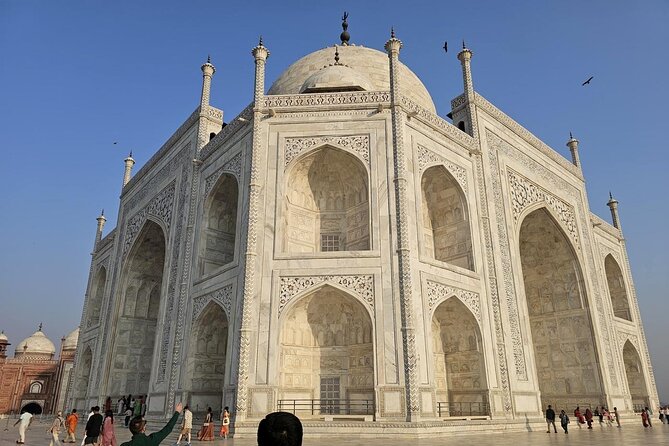
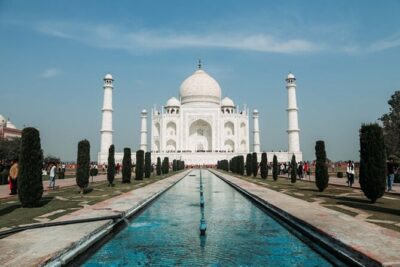
The sunset stop is specifically a view of the Taj from across the river, away from the main entrance crowds. On day four, you return for a sunrise visit and spend about two hours at the mausoleum itself. That second visit is a smart feature: the river view and the close-up visit are different experiences, and the early light gives the Taj a softer look.
The Taj is the emotional centre of the route, but it is also a busy, closely managed site. Follow your guide’s instructions and leave time for entry procedures. Keep the day’s early start in mind when deciding whether the two-hour visit feels generous; the schedule moves on to Fatehpur Sikri and Jaipur.
Fatehpur Sikri and Chand Baori break up the drive
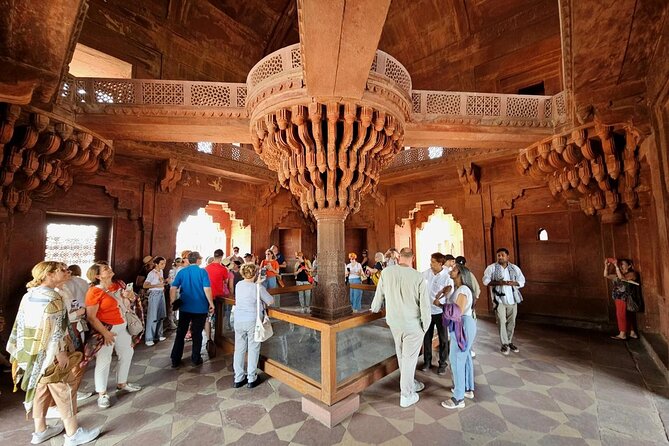
After the sunrise Taj visit, the tour heads toward Jaipur with stops at Fatehpur Sikri and Chand Baori. Fatehpur Sikri was built by Emperor Akbar and served as the Mughal capital for roughly a decade. Its palaces and public spaces give you a sense of the scale of Akbar’s court, though the planned visit is only an hour.
Chand Baori, in Abhaneri, is a deep stepwell with closely arranged flights of steps descending toward the water. It is an unusual stop on a route dominated by forts and palaces, and a good reminder that architecture in this region also answered practical needs. The visit is listed at 30 minutes.
The day ends with arrival in Jaipur and hotel check-in. Since you have already had a sunrise start and two stops, this is not a day to plan much else. Take the evening to rest before Jaipur’s full sightseeing day.
More Delhi tours and day trips in Delhi:
- Old & New Delhi City Tour – Half or Full Day Options Available
★ 5.0 · 4,811 reviews - Same Day Taj Mahal, Agra Fort & Baby Taj Tour from Delhi by Car
★ 5.0 · 4,304 reviews - Taj Mahal Day Tour from Delhi by Superfast Train – TOP RATED TOUR
★ 5.0 · 4,166 reviews - Delhi: Old and New Delhi Private Full or Half-Day Tour
★ 4.9 · 3,776 reviews
Jaipur’s forts and palaces need a full day
Day five starts at Panna Meena ka Kund, a stepwell near the fort area. The stop is brief, about 15 minutes, so think of it as a quick look rather than a long visit. Amber Fort gets more time, with a two-hour guided tour of its palaces, squares and monuments. Its position above the surrounding area and its layered courtyards make it one of the most rewarding stops in Jaipur.
Jal Mahal, the palace in Man Sagar Lake, is a photo stop rather than a full visit. The schedule allows about 15 minutes, so you will likely see it from the lakeside rather than explore the building. The City Palace takes an hour and offers a close look at Jaipur’s former royal and administrative centre.
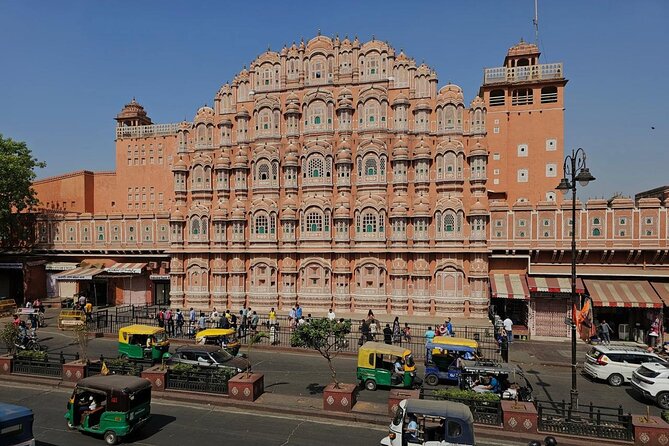
Jantar Mantar is a UNESCO-listed collection of astronomical instruments built in 1734 under Sawai Jai Singh II. Give your guide your attention here: the instruments make more sense once someone explains what they measured. Hawa Mahal, the five-storey Palace of Winds, closes the day with its distinctive pink and red sandstone facade.
Jaipur has a lot of ground to cover, and the day is tightly arranged. The private format helps, but it does not remove the walking or the number of sights. Comfortable shoes and a willingness to keep moving will serve you well.
Udaipur offers a slower change of scene
Day six is mostly a transition to Udaipur, followed by hotel check-in. The schedule does not specify the journey time or sightseeing on arrival, so treat this as a travel day rather than a day packed with planned visits. It is a useful pause after Jaipur, though the route has several long drives still to come.
The next day is devoted to Udaipur. Lake Pichola is the natural starting point, with an hour set aside for sightseeing and boating. A private boat ride is described as an option, with a possible stop at Jagmandir Palace island; confirm any extra charge before you board, since the tour’s inclusions do not specify that boat fare.
The City Palace sits beside the lake and gets about two hours. Inside, collections include weapons, pictures, palanquins and other objects connected with the royal household. The elevated position also gives you views over the city and water, making this one of the most scenic parts of the route.
Jagdish Temple, known for Indo-Aryan architecture, is a short visit of about 30 minutes. Bagore Ki Haveli Museum is scheduled for an hour, but the description notes that you can skip it if you prefer. That flexibility is welcome if you would rather spend more time by the lake or need a quieter hour.
Jodhpur brings blue lanes and a hilltop fort
Day eight begins with a drive to Jodhpur and hotel check-in. The plan then takes you to the Clock Tower Market, built during Maharaja Sardar Singh’s reign in the late 19th or early 20th century. The market stop lasts an hour and offers a chance to see the city’s everyday trade as well as its historic centre.
Mehrangarh Fort is the main event on day nine. Set on a rocky outcrop above the walled city, this 15th-century fort now operates as a museum, with weapons, paintings and royal palanquins among its displays. The scheduled hour is short for a large site, so focus on the parts your guide considers most worthwhile.
Umaid Bhawan Palace is one of the world’s largest private residences; part of it houses a museum. The building’s golden-yellow stone gives it a different look from Mehrangarh’s fort walls. Jaswant Thada, a marble memorial for the rulers of Marwar, provides a quieter final stop in Jodhpur.
After these visits, you continue to Pushkar and check in for the night. The transfer time is not specified, so keep the day open and avoid adding fixed plans after the scheduled stops.
Pushkar closes the circuit with a sacred lake
Day ten starts at Brahma Temple, where your guide explains the temple’s mythology and architecture. The visit is about 15 minutes. Pushkar Lake and Brahma Ghat follow, with time to observe prayer rituals and the lakeside setting. The schedule allots around 30 minutes, so this is a brief introduction rather than an extended stay in town.
Then comes the drive back to Delhi, listed at about five hours. That is a substantial final leg, so plan your onward departure with room for delays. The tour ends in Delhi with hotel or airport drop-off available.
What the price and private format mean
An air-conditioned private vehicle is included, with a 4-seat sedan for one or two people, a 6-seat wagon for three or four, and a 10-seat minivan for groups of five to ten. Having the same driver across the route can make the logistics easier, especially when you are carrying luggage between hotels. The repeated praise for punctual, safe and helpful driving is a strong point of the service, though driving style and assigned staff can vary.
The hotel package includes nine nights and breakfast, but only when booked with that option. Rooms are generally twin-sharing. A group of three is placed in a triple-share room by default; if you want two rooms, an extra charge applies. Confirm the room setup and hotel option before paying, since the headline price alone does not tell you what lodging is included.
The stated $150 per person for monument tickets is a significant addition to the advertised price. Tips, laundry, personal spending, insurance and transport to India are also yours to arrange. The tour includes bottled mineral water during journeys and breakfast on nine mornings when the hotel option is selected.
Who should book this 10-day tour?
I would consider this tour if you want a broad first look at North India and value having a private driver and city guides more than having long stretches of unplanned time. It suits couples, families or solo visitors who want a set route and the reassurance of organized transport. Past trips have named helpful drivers such as Vinod, Ashok, Surendra and Maan, and a Jaipur guide named Satish, but you should not assume you will be assigned those people.
It is less suited to anyone who wants a slow, in-depth stay in each city. The schedule touches six places, with packed sightseeing in Delhi, Agra and Jaipur and several long transfers. Before booking, check the hotel package, confirm the extra monument cost, and ask how much flexibility you will have to skip a stop or adjust a day.
If that balance works for you, the route is a practical way to connect the Taj Mahal and the major Rajasthan cities without planning each transfer yourself. If you would rather see fewer places at a gentler pace, trim the route or add nights.
FAQ
What cities does the tour visit?
The tour visits Delhi, Agra, Jaipur, Udaipur, Jodhpur and Pushkar over 10 days.
Is this a private tour?
Yes. It is a private activity for your group only.
Are hotel stays included in the price?
Nine nights with breakfast are included if you book the option that includes hotels. Check your selected option before booking.
Are monument entrance fees included?
No. Monument entry fees are excluded. The stated amount is $150 per person.
What transport is provided?
The tour includes an air-conditioned private vehicle and hotel or airport pickup and drop-off. Vehicle size depends on group size: sedan for one or two, wagon for three or four, and minivan for five to ten.
How many breakfasts are included?
Nine breakfasts are included with the hotel-inclusive option.
How long is the drive from Pushkar to Delhi?
The final drive is listed at approximately five hours.
Can I cancel for a full refund?
You can cancel at least 24 hours before the experience’s start time for a full refund. Cancellations within 24 hours are not refunded, and changes within that period are not accepted.
Latest reviews from Delhi
- Taj Mahal Day Tour with Private Car and Driver from New Delhi★ 5.0 · 8 reviews
- Old & New Delhi City Private Full Day or Half Day Tour★ 5.0 · 32 reviews
- Dalai Lama Himalayan Trek★ 5.0 · 8 reviews
- Private Delhi Shopping Tour with Female Expert★ 5.0 · 7 reviews
- Private Transfer Delhi -Jaipur || Jaipur- Delhi★ 5.0 · 37 reviews
- Delhi Custom And Shopping Tour★ 4.5 · 9 reviews
- Old Delhi Morning – Fun, Food & Faith all inclusive private tour★ 5.0 · 49 reviews
- Delhi Private City Tour: Customize your own★ 4.5 · 14 reviews
Golden Triangle Tours, compared.
3-Days Private Golden Triangle Tour: Delhi, Agra & Jaipur by Car
Read our review →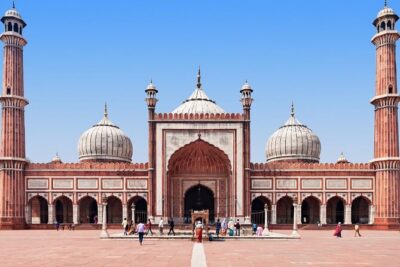
3-Day Delhi, Agra and Jaipur Private Tour – India Golden Triangle
Read our review →
Four-Day Private Luxury Golden Triangle Tour to Agra and Jaipur From New Delhi
Read our review →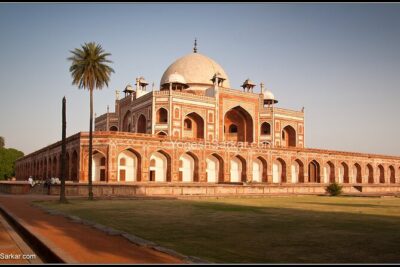
Private Golden Triangle Tour Delhi Agra Jaipur ( Top Rated )
Read our review →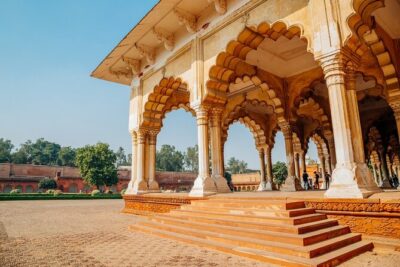
Golden Triangle & Ranthambore: 4-Day Private Tour from Delhi
Read our review →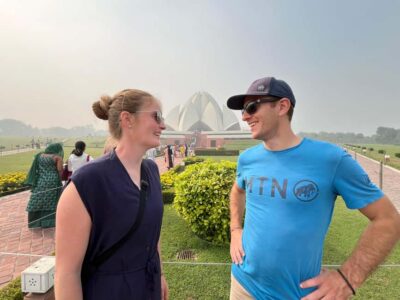
Browse the lists this tour appears in