
Reviewed · DELHI TOURS
Gandhi Delhi Private History Adventure Tour
Gandhi’s Delhi comes into focus at three places: the house where he spent his final days, a museum devoted to his work and belongings, and the memorial where he was cremated. The private format gives you room to ask questions and take the sites at your own pace, rather than keeping up with a larger group.
I like the way the route pairs Gandhi Smriti with the National Gandhi Museum, so you get both a personal glimpse of his final days and a broader look at his ideas and work. I also like that hotel pickup and private transport are included. One thing to weigh: the scheduled visits add up to about 80 minutes, so the rest of the roughly four-hour tour depends on transfers and how time is managed.
- Gandhi Smriti is the house where Gandhi spent his final days and was assassinated in January 1948.
- The National Gandhi Museum holds books, manuscripts, journals, photographs and other items connected to his life.
- Raj Ghat marks the place where Gandhi was cremated, with the words Hey Ram inscribed on the memorial.
- Private transport and hotel pickup are included for centrally located hotels in Delhi.
- A 1:00 pm start and an approximate four-hour duration make this an afternoon tour.
- The guide can help with next steps, including tips on what to see, do and eat, or help arranging a taxi back to your hotel.
Three stops that tell a larger story
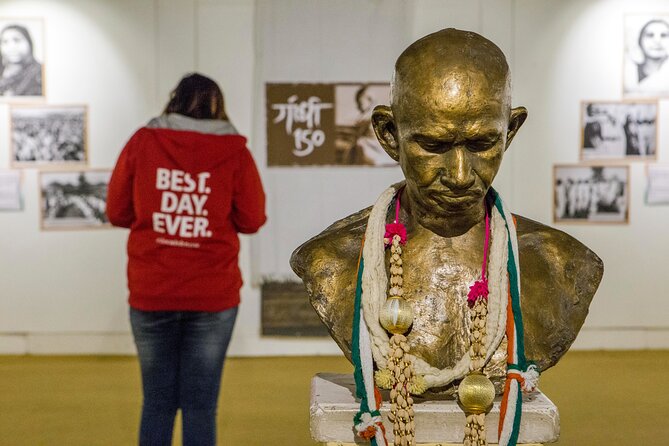
This tour is built around a compact sequence of sites that help you understand Gandhi’s life and legacy through places, objects and memory. The route moves from the house connected with his final days to a museum of his writing and work, then to the site of his cremation. It gives you a focused history lesson without trying to cover all of Delhi in one afternoon.
The subject is not presented as a distant figure from a textbook. At Gandhi Smriti, you see the place where he lived near the end of his life and where he was killed. At the museum, you can look through material tied to his philosophy and public work. At Raj Ghat, the setting shifts to commemoration and reflection.
That range is what gives the itinerary its value. You are not just stopping for a photograph at a monument. You are moving through the different ways a person’s life is remembered: in a home, in preserved documents and objects, and at a memorial.
Gandhi Smriti: a house tied to Gandhi’s final days
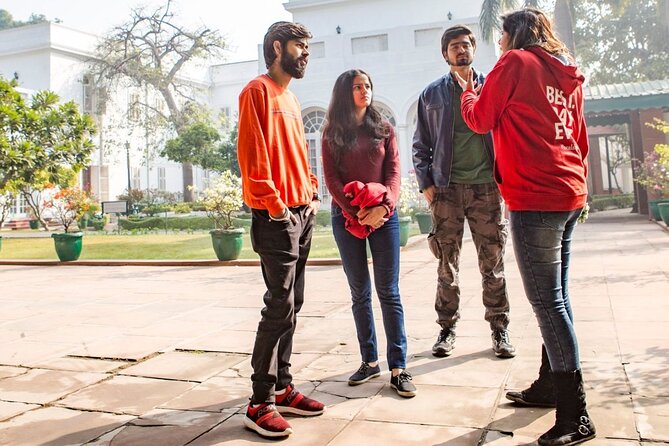
The tour begins at Gandhi Smriti, formerly Birla House. Gandhi spent the final days of his life here, and he was assassinated on the grounds in January 1948 during his routine evening walk. The visit includes his well-preserved room and the grounds associated with that walk, as well as a multimedia museum.
This is the most personal stop on the route. A room can tell you something a grand monument cannot: it gives you a sense of the everyday place where history unfolded. The grounds add another layer, connecting the site to the final moments of Gandhi’s life rather than only to his public reputation.
The museum’s multimedia displays and artifacts can help put that moment in context. Your guide can explain how Gandhi’s principles of non-violent protest connected to his wider campaign for equality and justice. That context matters, especially if you know the broad outline of his life but want a clearer sense of why his ideas still carry weight.
The listed visit is about 40 minutes, the longest stop in the schedule. That is useful time, but it is not unlimited. If you tend to read every display or want to spend a long while reflecting at the site, ask your guide early about the pace and what can fit within the tour.
More history tours in Delhi:
- The Great Indian Food Tour: Old Delhi Food and Heritage Walk
★ 5.0 · 1,698 reviews - Old Delhi Food, Heritage&Cultural Walk with Rickshaw ride to Masterji Kee Haveli
★ 5.0 · 742 reviews - Old Delhi Heritage Walking Tour
★ 5.0 · 247 reviews
The National Gandhi Museum: documents, images and ideas
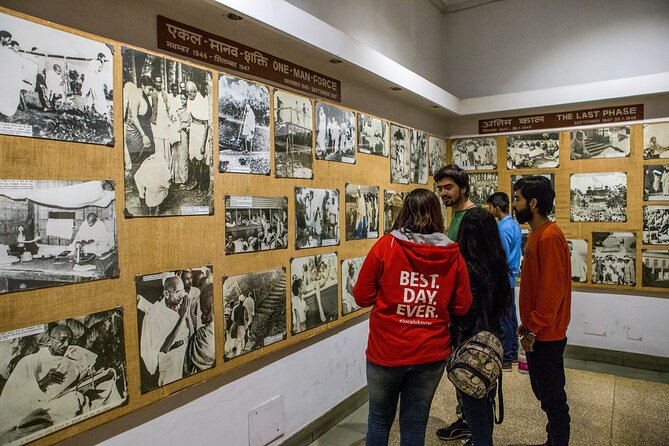
Next comes the National Gandhi Museum, also called the Gandhi Memorial Museum. Its collection includes books, manuscripts, journals, photographs and other items connected to Gandhi’s life, philosophy and work. The emphasis here is less on the place where events happened and more on the record he left behind.
This stop helps fill in the story between the house and the memorial. Documents and photographs can make the tour feel less like a series of commemorative sites and more like an introduction to the person and his thinking. If you want to understand why Gandhi is associated with non-violent protest, this is a good place to slow down and ask your guide to connect what you see with the ideas behind it.
The scheduled visit is 20 minutes, which may feel short for a museum with a broad collection. The description of the tour suggests time to explore, but the actual pace can depend on transfers, how long you spend at Gandhi Smriti and the guide’s approach. If the museum is your main priority, say so at the start rather than assuming every display will fit into the allotted time.
Raj Ghat: a quiet final stop

At Raj Ghat, you visit the place where Gandhi was cremated. His memorial is inscribed with Hey Ram, his final words, and sits within a green garden on the west bank of the Yamuna River. Other Indian leaders were cremated there at different points, so the site also forms part of a wider national memorial ground.
The atmosphere here differs from Gandhi Smriti and the museum. It is a place for remembrance, not a house or an exhibition. The setting gives the tour a quieter ending, and the memorial’s simplicity encourages you to pause rather than rush through a long display.
The scheduled stop is about 20 minutes. That is enough for a visit, but the site is not designed as a long guided attraction. You may find that the guide’s explanation is most useful before or after your time at the memorial, when the story of Gandhi’s life can be gathered into a few clear points.
What a private guide changes
The tour is private, so only your party takes part. The maximum group size is listed as 12, and the format is meant to keep the experience personal. That matters on a history-focused outing: you can ask for clarification, spend a little longer on a subject that interests you, or tell the guide if you need a brisker pace.
The guide is English-speaking and explains Gandhi’s life, his commitment to non-violent protest and the significance of the places on the route. The guide can also offer suggestions for what else to see, do and eat during your stay. If you want to connect this tour with the rest of your Delhi plans, that practical local advice may be as useful as the history.
Guide quality is important here, and it can vary. Guides named by past participants include Abhi, Indira and Audesh C. Mishra. Abhi was accompanied by Sonny, a driver described as friendly and professional. Audesh was noted for extending the visit while the group took its time. Those names are examples of guides who have led the tour, not a promise about who will be assigned to you.
Most feedback has been strongly positive, especially about guides who are friendly, clear and well informed. A few accounts describe thin historical explanations, a late start or a tour that finished sooner than expected. That contrast is worth taking seriously. At the start, confirm the expected finish time, ask how much time is planned at each stop and tell your guide what you most want to learn.
More Delhi tours and day trips in Delhi:
- Old & New Delhi City Tour – Half or Full Day Options Available
★ 5.0 · 4,811 reviews - Same Day Taj Mahal, Agra Fort & Baby Taj Tour from Delhi by Car
★ 5.0 · 4,304 reviews - Taj Mahal Day Tour from Delhi by Superfast Train – TOP RATED TOUR
★ 5.0 · 4,166 reviews - Delhi: Old and New Delhi Private Full or Half-Day Tour
★ 4.9 · 3,776 reviews
Afternoon timing, pickup and pace
The stated start time is 1:00 pm, and the total duration is approximately four hours. The three scheduled visits account for about 80 minutes: 40 at Gandhi Smriti, 20 at the National Gandhi Museum and 20 at Raj Ghat. The remaining time allows for transport between sites and other parts of the visit, though the exact pace is not specified.
Private transportation and pickup from a centrally located Delhi hotel are included. That saves you from arranging separate rides between sites and makes the outing simpler, especially if you are still getting used to Delhi’s streets. At the end, you can continue exploring on your own or ask the guide to help arrange a taxi back to your hotel.
The stated duration is approximate, and timing deserves a quick check before you set your afternoon plans. Some past outings have run longer than scheduled, while others have ended earlier than expected. If you have a dinner booking or another fixed commitment, tell the guide before you set off and confirm how the schedule is likely to work that day.
Admission tickets for the three named sites are included. Food, drinks and guide gratuities are not, so plan to cover those separately. The tour is listed as carbon neutral and is operated by a B Corp certified company committed to using travel as a force for good. If those principles matter to you, they add a useful point of difference, though they do not replace the basic question of whether the route and guide suit your interests.
Is $40.03 per person good value?
At $40.03 per person, the price buys more than entry to three Gandhi-related sites. It includes a private guide, private transport and pickup from a centrally located hotel, along with admission tickets and an explanation of the places you visit. You are paying for the links between the sites as much as for the sites themselves.
That can be a sensible deal if you value a guided account and want transportation handled for you. The places can be visited without this tour, and the sites are free to enter according to one account, so the price is not mainly about access. The added value is having someone connect the house, museum and memorial, plus getting help with the route.
The value drops if you prefer to spend a long time reading museum displays on your own, or if the guide gives only a brief account. The schedule gives the National Gandhi Museum and Raj Ghat just 20 minutes each, so people who want a slower museum visit should make that preference clear before the tour begins. If you are sharing the private tour with family or friends, the per-person price may feel more worthwhile because you still have your own group and vehicle.
Who will get the most from this tour?
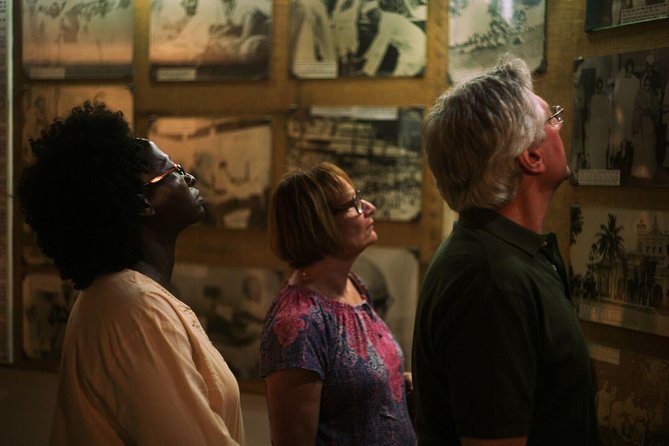
This is a good fit if Gandhi’s life and ideas are high on your Delhi list, especially if you want to see the places associated with his final days rather than only read about him. It also suits a short stay: the half-day format focuses on three sites and leaves room for other plans.
It can work well for families, too. The tour is child-friendly, and children under six can join free of charge if you tell the operator when booking. The subject is serious, but the mix of a former home, museum and memorial gives children different ways to engage with the story. Modest clothing is recommended: cover your shoulders and knees, and choose loose, lightweight clothes for the hot climate.
You may want to skip it if you are looking for a broad tour of Delhi or a relaxed, hours-long museum visit. The focus is Gandhi, and the stops are specific. If your main goal is to see many neighborhoods or major attractions around the city, this route will not cover them.
Should you book the Gandhi Delhi private tour?
Book it if you want a focused, guided look at Gandhi’s Delhi, appreciate having transport arranged and prefer to ask questions without a large group around you. The strongest reason to go is the combination of Gandhi Smriti and Raj Ghat with the museum in between: together, they show where he lived, what he worked for and how he is remembered.
Before setting off, confirm the pace and your expected finish time. Tell the guide which stop matters most to you, particularly if you want more time at the National Gandhi Museum. If you are comfortable with a compact route and a schedule that may vary, this is a practical way to give an afternoon in Delhi a clear purpose.
FAQ
How long is the Gandhi Delhi private tour?
The tour lasts approximately four hours. The scheduled visits are about 40 minutes at Gandhi Smriti, 20 minutes at the National Gandhi Museum and 20 minutes at Raj Ghat, with the rest of the time covering transport and other parts of the outing.
What time does the tour start?
The listed start time is 1:00 pm.
Which sites are included?
The tour visits Gandhi Smriti, the National Gandhi Museum and Raj Ghat. Admission tickets to these sites are included.
Is hotel pickup included?
Yes. Private transportation and pickup are included from centrally located hotels in Delhi.
Is the tour private?
Yes. Only your party takes part in the private tour.
Can children join?
Yes. The tour is child-friendly, and children under six can join free of charge. Tell the operator when booking if you are bringing a child under six.
What is not included in the price?
Food, drinks and gratuities for the guide are not included.
Latest reviews from Delhi
- Taj Mahal Day Tour with Private Car and Driver from New Delhi★ 5.0 · 8 reviews
- Old & New Delhi City Private Full Day or Half Day Tour★ 5.0 · 32 reviews
- Dalai Lama Himalayan Trek★ 5.0 · 8 reviews
- Private Delhi Shopping Tour with Female Expert★ 5.0 · 7 reviews
- Private Transfer Delhi -Jaipur || Jaipur- Delhi★ 5.0 · 37 reviews
- Delhi Custom And Shopping Tour★ 4.5 · 9 reviews
- Old Delhi Morning – Fun, Food & Faith all inclusive private tour★ 5.0 · 49 reviews
- Delhi Private City Tour: Customize your own★ 4.5 · 14 reviews
Delhi Tours, compared.

Old & New Delhi City Tour – Half or Full Day Options Available
Read our review →
Same Day Taj Mahal, Agra Fort & Baby Taj Tour from Delhi by Car
Read our review →
Taj Mahal Day Tour from Delhi by Superfast Train – TOP RATED TOUR
Read our review →


Taj Mahal Tour from Delhi by Express Train (Viator Award Winner)
Read our review →
All Inclusive Private Taj Mahal Luxury Tour from Delhi by Car
Read our review →
Browse the lists this tour appears in