
Reviewed · QUTUB MINAR TOURS
Delhi: Qutub Minar UNESCO World Heritage Site Walking Tour
Qutub Minar’s 73-meter tower rises above a complex where Delhi’s past is written in stone, from finely carved bands on the minaret to reused temple pillars in the mosque. A guided walk makes it easier to read these details and connect the buildings to the rulers who shaped them.
I like two things in particular: the tour brings several distinct monuments together in one compact visit, and a private guide can give the carvings and architectural changes a human-scale explanation. One named guide, Madhuvan, has been singled out for an engaging approach, while the tour’s strongest praise also points to its background detail.
One consideration: the listed price is low, but the stated inclusions name the guide and an optional car transfer, not an entrance ticket. Check what the $9 covers before you book, and allow enough time to explore without rushing.
Key points to know before you go
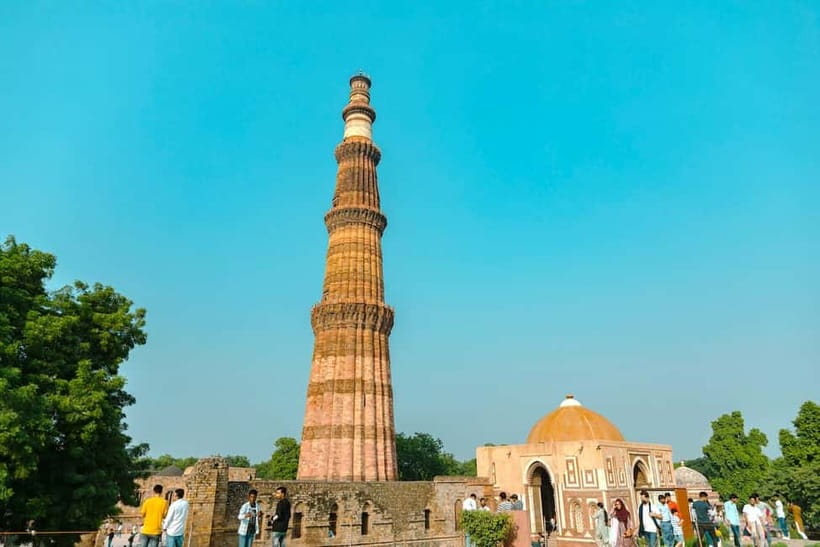
- The 73-meter Qutub Minar is the complex’s landmark, with distinct designs on its successive storeys.
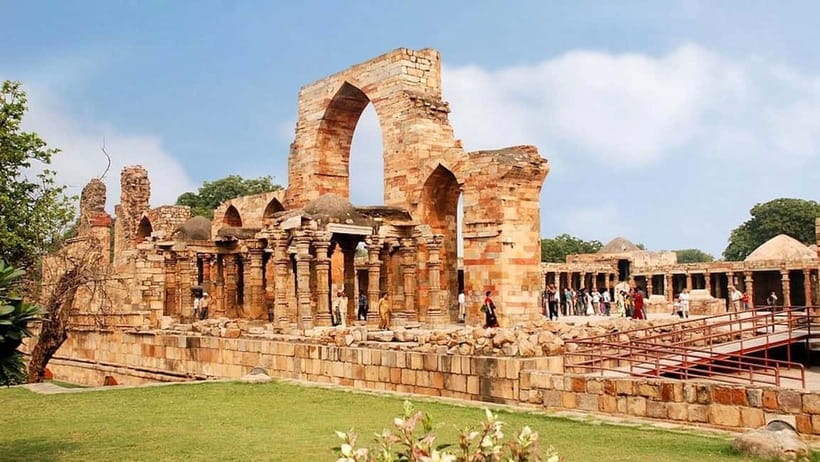
- Quwwat-ul-Islam Mosque combines arched entrances with pillars reused from earlier Hindu and Jain temples.
- The Iron Pillar is a striking stop for anyone curious about ancient metalworking and its rust-resistant surface.
- Alai Darwaza and Alai Minar show two different ambitions: a finished gateway and an unfinished tower.
- A private guide leads the walk in English or Hindi, with Madhuvan named as one guide, though assignments may vary.
- Plan for 2 to 3 hours and check whether your chosen option includes a private-car transfer and what the price covers.
Reading the Qutub Minar complex one monument at a time
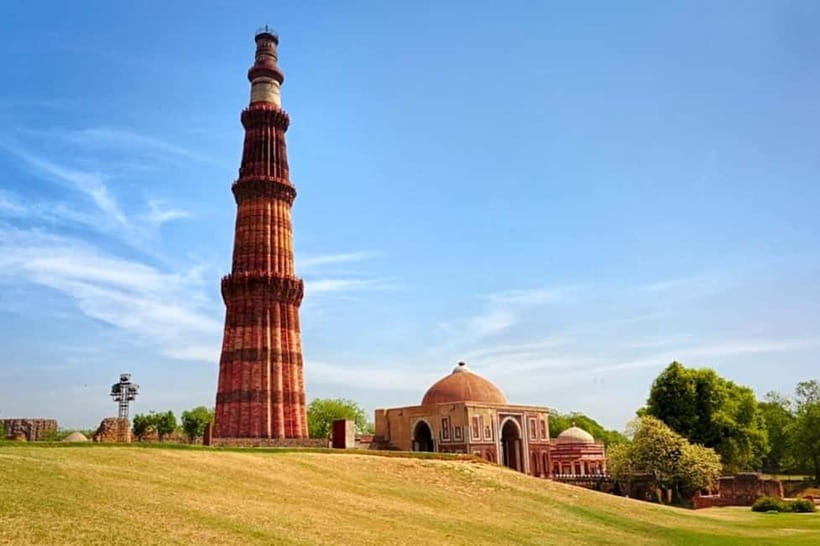
A visit here is more than a look at one famous tower. The Qutub Minar complex brings together buildings from different periods, so a few steps can take you from a minaret to a mosque, then to a gateway and an unfinished monument. That mix is what makes a guided walk useful: the site is easier to understand when you know what you are looking at.
The tour is listed as a private-group experience. That can make the pace and conversation more personal than a large group walk, especially if you want to ask questions about specific carvings or architectural features. It does not promise a particular guide, but Madhuvan is a named guide associated with the experience. If you are hoping to meet that guide, ask when booking rather than assuming.
The listed duration is 2 to 3 hours. That is enough time for a focused circuit of the main landmarks, though how much time you spend at each stop may depend on your pace and your guide’s explanations. I would treat the upper end of that range as a sensible target if you want room to look closely rather than hurry from one structure to the next.
More heritage tours in Delhi:
- The Great Indian Food Tour: Old Delhi Food and Heritage Walk
★ 5.0 · 1,698 reviews - Old Delhi Food, Heritage&Cultural Walk with Rickshaw ride to Masterji Kee Haveli
★ 5.0 · 742 reviews - Old Delhi Heritage Walking Tour
★ 5.0 · 247 reviews
Starting at the 73-meter Qutub Minar
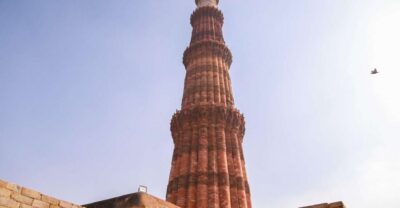
The minaret is the natural starting point. At 73 meters, it dominates the site, and its red sandstone and marble make it easy to spot from across the complex. The tower dates to the early 13th century, giving you an immediate sense of the age and scale of the monuments ahead.
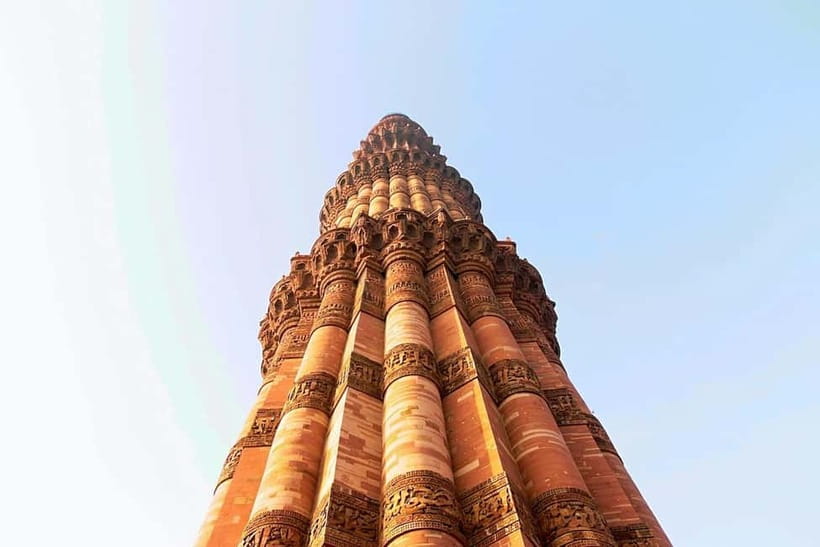
Take time to notice the carved bands and Arabic inscriptions around the base. Geometric patterns add another layer of detail, and the work is linked to the Mamluk dynasty. Rather than treating the tower as a single block, look at its storeys: each has a distinct design, reflecting construction under successive rulers.
This is where a guide’s background explanation can add the most value. Intricate decoration rewards a close look, but it can be hard to interpret on your own. A guide can help you notice the changes in form and explain how the tower’s construction developed over time. The strong praise for engaging delivery and detailed background matters here: this is a place where context can turn a quick photo stop into a more satisfying visit.
The practical limit is that the minaret’s height is impressive even from below, but the tour description does not include a climb or access inside the tower. Plan on viewing and interpreting it from the surrounding complex, not treating it as an ascent.
At Quwwat-ul-Islam Mosque, look closely at the pillars
The mosque is described as the first built in India, and its arched gateways make it a major stop in the complex. The most arresting detail is the use of pillars repurposed from earlier Hindu and Jain temples. Their presence brings different artistic traditions into direct view, creating a striking contrast with the mosque’s arches and other Islamic design elements.
I would not rush through this part of the walk. Look at the pillars as individual pieces of workmanship, then consider how they sit within a different religious and architectural setting. The result is visually compelling, but it also reflects a complex past. A guide can help you understand what you are seeing without reducing it to decoration alone.
For visitors with limited time, this stop is one reason the tour is more than a minaret photo opportunity. The complex contains several distinct structures within the same visit, and the mosque gives you a different architectural vocabulary to compare with the tower. If you like history best when it is attached to visible details, this is likely to be one of the most rewarding sections.
The Iron Pillar and its unusual surface
A short distance from the mosque, the Iron Pillar offers a change of scale and material. It is notable for its rust-resistant surface, a feature that makes it an enduring point of interest in a complex otherwise dominated by stonework. The supplied tour details do not give further technical specifications, so the most useful approach is to focus on what you can see and ask your guide to explain the metallurgy.
This stop is a good reminder that the site is not only about grand architecture. The pillar draws attention through a smaller, more concentrated puzzle: how an ancient metal object has resisted rust. If you are interested in engineering or materials, it may hold your attention as strongly as the tower. If your main interest is large buildings, it is still worth pausing for the contrast.
The available details do not specify how long the group spends here, or whether the guide offers a particular explanation of the pillar’s composition. You can make the most of the stop by asking about the surface and its preservation rather than expecting an extended technical demonstration.
More Qutub Minar visits in Delhi:
- Skip-the-line Qutub Minar Private Tour with Transfer Option
★ 4.7 · 17 reviews - New Delhi: Qutub Minar Light & Sound Show Tour
★ 4.3 · 15 reviews - Private Delhi Tour: Lotus Temple, Qutub Minar and Dilli Haat
★ 4.5 · 11 reviews - Private Walking Tour: South Delhi Heritage including Qutub Minar and Mehrauli Archaeological Park
★ 4.5 · 11 reviews
Alai Darwaza and the unfinished Alai Minar
Alai Darwaza is a gateway with distinctive Indo-Islamic architecture. It adds another style to the visit and helps break up the sequence of tower, mosque, and pillar. Look at it as a building in its own right, not merely as a passage between other sights. Its value is in the architectural contrast it offers within a compact area.
The unfinished Alai Minar provides a different kind of interest. It was an ambitious project that was abandoned, leaving the visitor with a clear example of a monument that never reached its intended form. That incomplete state makes it an unusually direct way to think about changing plans and interrupted construction. You see not only what rulers managed to build, but also what remained unfinished.
Together, these two stops give the tour a satisfying final stretch. Alai Darwaza shows a completed architectural statement, while the Alai Minar leaves you with a visible fragment of an unrealized plan. The contrast adds a human note to a visit otherwise filled with imposing stonework.
What the guide adds to the walk
The experience includes a professional guide, with English and Hindi listed as the tour languages. The feedback attached to this experience emphasizes engaging delivery and detailed background on the buildings. Those are the qualities I would look for here: not just a guide who identifies each structure, but one who helps you understand why its features matter.
Madhuvan is the one named guide connected with the tour, but that does not guarantee that Madhuvan will lead your departure. If the guide’s presence is important to you, confirm it with the provider. Otherwise, use the available guide language and the private-group format as the more dependable planning details.
A private walk is particularly helpful for a site with several layers of history and visual detail. You can ask questions as they arise, and your group does not have to share the guide’s attention with a larger crowd. The trade-off is that the experience depends in part on the guide’s style. The positive emphasis on engagement and context is encouraging, but it is sensible to arrive with a few questions of your own.
Price, transport, and practical planning
At $9 per person, the tour is inexpensive for a guided visit of 2 to 3 hours. The value depends on what you want from the outing. If you mainly want to see the landmarks, you can focus on the site itself; if you want to understand the inscriptions, reused pillars, and changing building styles, a guide can make the time more useful.
The listed inclusions are a professional guide and, if you select that option, transfer in a private car. Since the stated inclusions do not identify an entrance ticket, confirm whether admission is covered and whether any additional costs apply. The transfer is optional, so check that your selected version includes it before making transport plans.
The experience is marked wheelchair accessible. If accessibility is a practical need for you, contact the provider to clarify what that means for the route through the complex and the specific stops. The details provided do not describe surfaces or access conditions at each monument.
You can reserve now and pay later, and cancellation is allowed up to 24 hours in advance for a full refund. Those terms offer flexibility if your Delhi plans are still taking shape. The tour’s starting times depend on availability, so check the available choices before settling on the rest of your day.
Who will get the most from this tour
I would recommend this walk to anyone who wants more than a quick view of Qutub Minar. It suits visitors interested in architecture, inscriptions, ancient metallurgy, or the way religious and artistic traditions meet in a historic site. The private format also works well if you prefer to ask questions without having to speak up in a large group.
It may be less appealing if you want a long, highly specialized archaeology lecture or a tour that includes a climb up the minaret. Neither is promised. The strength here is a guided circuit of the major features, with enough variety to keep the visit moving and enough detail to reward a slower pace.
Families or groups with different interests may also find the sequence helpful. The tower, mosque, Iron Pillar, gateway, and unfinished minar each offer a different focus, so the walk is not built around one type of monument. The 2-to-3-hour duration is a manageable block of time, though you should choose your starting time with the day’s other plans in mind.
Should you book the Qutub Minar walking tour?
Book it if you want an affordable, private guided introduction to one of Delhi’s most notable historic complexes. The strongest reasons are the range of monuments in one visit and the chance to hear the stories behind details that are easy to overlook, especially the mosque’s reused pillars and the tower’s changing storeys.
Before paying, confirm whether the entrance fee is included and whether you want the private-car option. If having Madhuvan as your guide matters, ask whether that can be arranged. With those details settled, this is a good fit for a focused half-day outing and a more thoughtful look at Qutub Minar than a walk around the tower alone.
FAQ
How long does the Qutub Minar walking tour take?
The tour lasts 2 to 3 hours. Check the available starting times when you plan your visit.
What is the price?
The listed price is $9 per person. Confirm what is covered, since the stated inclusions name a guide and an optional private-car transfer but do not specify an entrance ticket.
Which languages are available?
The live tour guide is listed as speaking English and Hindi.
Is the tour private?
Yes. It is listed as a private-group experience.
Is a private-car transfer included?
A transfer in a private car is available if you select that option. It is not listed as part of every version of the tour.
Is the experience wheelchair accessible?
Yes, the activity is marked wheelchair accessible. The details provided do not describe access at each individual stop, so check with the provider if you need specific route information.
Which landmarks are included in the walk?
The tour covers Qutub Minar, Quwwat-ul-Islam Mosque, the Iron Pillar, Alai Darwaza, and the unfinished Alai Minar.
Can I cancel for a refund?
Yes. You can cancel up to 24 hours in advance for a full refund.
Do I have to pay when I book?
No. The reserve-now, pay-later option lets you book without paying at the time of reservation.
More history tours in Delhi
- Old Delhi: Spices, Heritage and Bazaars Walking Tour
★ 5.0 · 173 reviews - 3-Hour Old Delhi Heritage Walking tour with Rickshaw ride
★ 4.6 · 158 reviews - Gandhi Delhi Private History Adventure Tour
★ 5.0 · 127 reviews - Delhi’s historical 7 hours experience tour
★ 5.0 · 115 reviews
More walking tours in Delhi
- Breakfast Walk in Old Delhi
★ 5.0 · 449 reviews - Delhi Food Walk: Rickshaw Ride, Street Eats & Market Tour
★ 5.0 · 401 reviews - New Delhi Slum Walking Tour
★ 5.0 · 360 reviews - 3-hour Old Delhi Heritage Walking tour with Rickshaw Ride
★ 5.0 · 240 reviews
Latest reviews from Delhi
- Taj Mahal Day Tour with Private Car and Driver from New Delhi★ 5.0 · 8 reviews
- Dalai Lama Himalayan Trek★ 5.0 · 8 reviews
- Old & New Delhi City Private Full Day or Half Day Tour★ 5.0 · 32 reviews
- Private Delhi Shopping Tour with Female Expert★ 5.0 · 7 reviews
- Private Transfer Delhi -Jaipur || Jaipur- Delhi★ 5.0 · 37 reviews
- Delhi Custom And Shopping Tour★ 4.5 · 9 reviews
- Old Delhi Morning – Fun, Food & Faith all inclusive private tour★ 5.0 · 49 reviews
- Delhi Private City Tour: Customize your own★ 4.5 · 14 reviews
Qutub Minar Tours, compared.
Skip-the-line Qutub Minar Private Tour with Transfer Option
Read our review →

Private Delhi Tour: Lotus Temple, Qutub Minar and Dilli Haat
Read our review →
Private Walking Tour: South Delhi Heritage including Qutub Minar and Mehrauli Archaeological Park
Read our review →
Mehrauli Archaeological Park Tour with Qutub Minar
Read our review →Browse the lists this tour appears in